
Kaigorotan · Sovereign Indigenous Nation
The Indigenous Peoples of Cordillera Nation (IPCN) unites the highland communities and contiguous territories under a collective vision of self-rule. We blend ancestral forest stewardship and traditional assemblies with modern development goals.

The Sovereign Vision
"The Indigenous Peoples of Cordillera Nation envisions a culturally-imbued, self-governing, and self-sustaining integrated development of the ancestral domain that harmoniously coexists with the Republic of the Philippines."
Our Mission
"To protect and promote cultural heritage, strengthen ancestral self-governance, and pursue integrated sustainable development of the domain that harmoniously coexists with the Republic of the Philippines."
IPCN Operations & Announcements
Explore the historic gatherings, formal agreements, and collaborations shaping the governance and future development of the Sovereign Indigenous Nation.
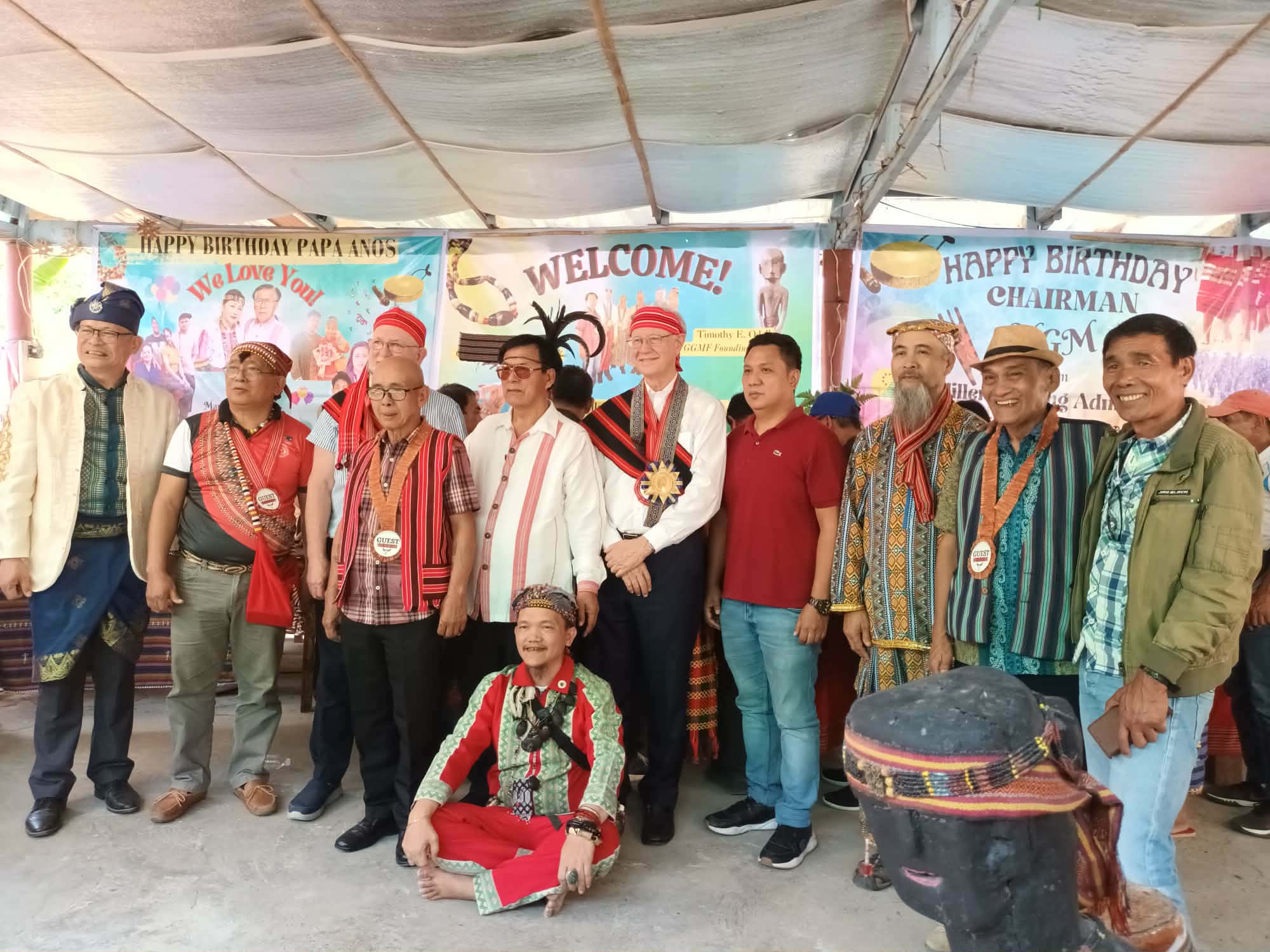
Marking one year since unification, highland leaders and community representatives gathered to ratify the Tribal Federal Sovereignty Constitution of the Indigenous Peoples of Cordillera Nation.

Formalizing administrative autonomy, the leadership executed the Headquarters Agreement to establish operational centers for tribal self-governance and domain stewardship.

Collaborative discussions with GGMF exploring custom stablecoins, localized digital ledger settlement, and financial protocols to support small-scale economies across the territory.
IPCN State Symbols
Adopted in 2024, these official symbols represent the unity, ecological heritage, continuous custom, and future trajectory of the Indigenous Peoples of Cordillera Nation.
Official Emblem
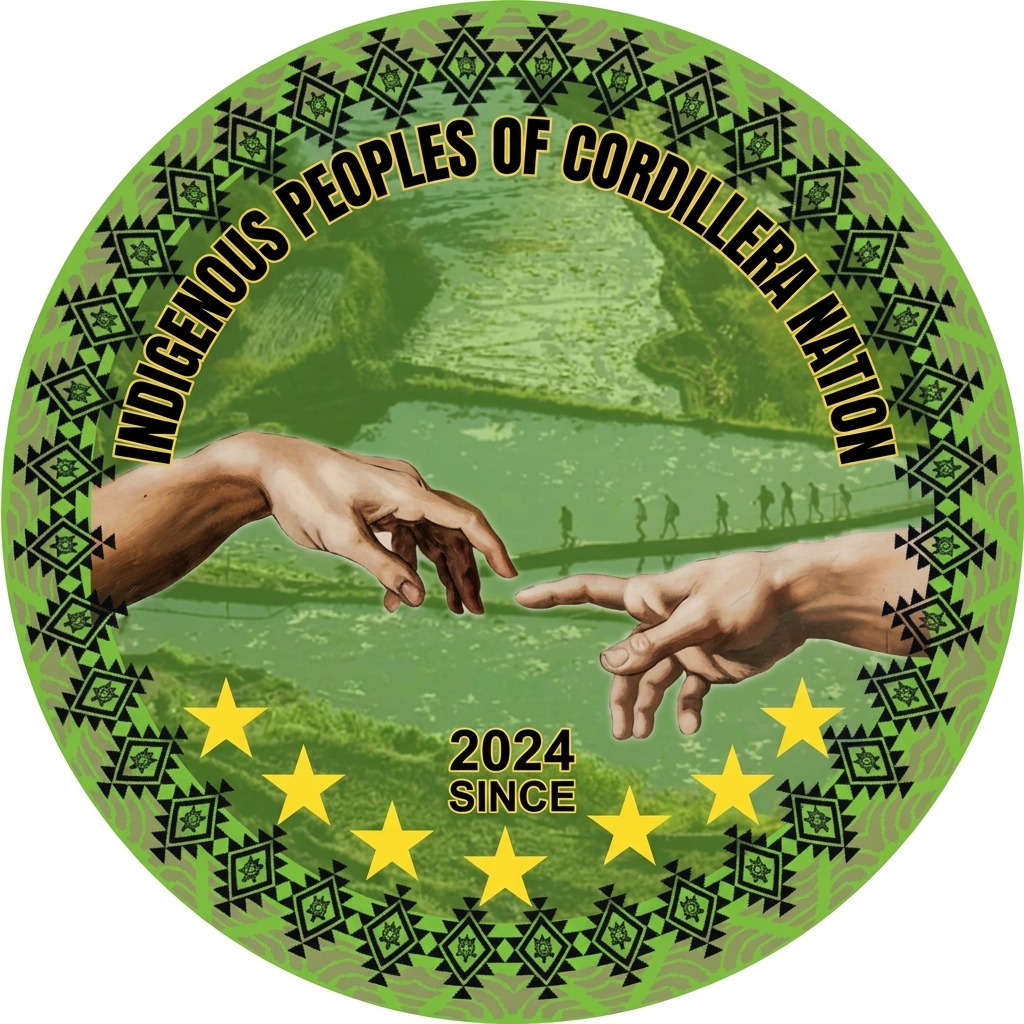
The circular seal represents the completeness of the ancestral domain. The green geometric border displays traditional Cordilleran weave patterns representing culture. The mountain valley and suspension footbridge highlight the natural highland environment we defend. The two hands in the center represent the creation of autonomy and peaceful unity among the tribes. The seven stars along the bottom symbolize the six provinces of the Cordillera and the Contiguous Areas established since 2024, with the final label cleanly integrated in gold and black in the bottom center.
National Banner

The IPCN flag features a warm yellow-cream background symbolizing peace and rich agricultural land. The central blue octagon represents structural stability and clarity of governance. Inside, the glowing comet/shooting star with a dust trail symbolizes a guided path toward future progress and enlightenment. The octagon is surrounded by seven red stars representing the collective strengths and sovereignty of the six highland provinces plus the Contiguous Area.
Ancestral Sovereignty
Long before lowland colonial systems mapped the highlands, the communities of the Cordillera Central range sustained their lands through strict customary borders, peace treaties, and collective councils.
The Cordillera mountain spine is not just a geographic structure, but an active socio-political space. Unconquered through three centuries of Spanish colonization, our institutions represent an unbroken connection to ancestral land governance.
IPCN serves as a modern governance interface, protecting the collective territorial rights of Cordillera nations. We verify boundary demarcations, implement communal land management policies, and coordinate local development efforts across all seven provinces and contiguous areas.
By registering domains and securing Free, Prior and Informed Consent (FPIC), we establish a modern operational framework that respects our elders' councils while enforcing constitutional rights under the Indigenous Peoples' Rights Act.
Peoples & Culture
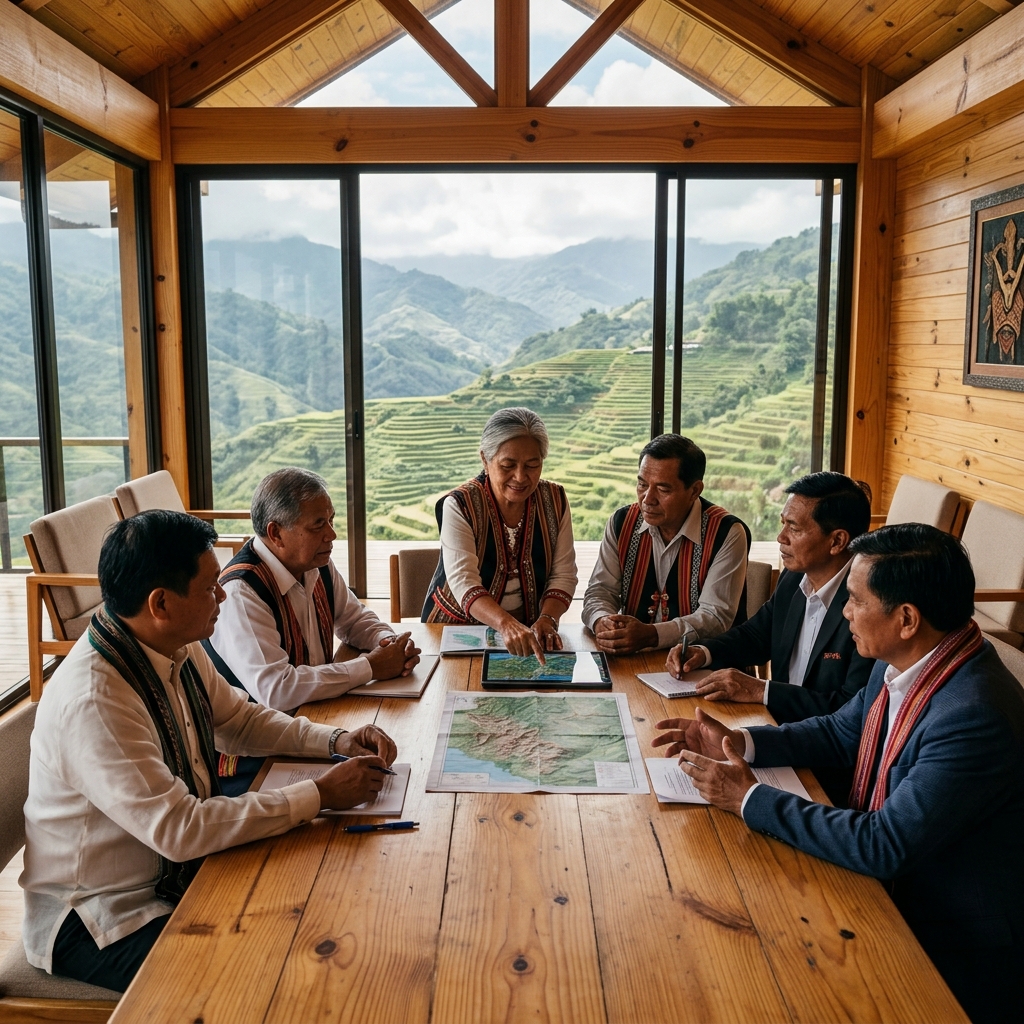
We are distinct societies with unique languages, weaving traditions, and customary laws, united by our shared geography, kinship, and historical defense of our domain.
Homeland in Abra. Renowned for their intricate binakol and pinilian geometric weaving, sugarcane wine (basi) rites, and the community lapat forest conservation system.
Agrarian leaders of southern Benguet. Known for gold-working heritage, cattle raising, and intricate oral epics describing centuries of terrace farming.
Builders of the dap-ay council systems. Famous for advanced backstrap loom weaving and deep expertise in highland terrace construction.
Governors of Chico River villages. Organized through ator houses and historically renowned for resisting aggressive mining and logging exploitation.
Architects of the UNESCO rice terrace systems. Pioneered the muyong agro-forestry network, widely cited as a model for modern ecological preservation.
Keepers of the bodong peace treaty protocol. Turned age-old diplomatic structures into region-wide alliances to protect mountain corridors.
Inhabitants of the Apayao-Abulog river corridors. Practicing swidden agriculture and riverine fishing in houses styled after boat shapes.
Self-Governance
Self-rule is defined by functional institutions. We bridge customary law with modern national policies to establish secure autonomy.
Local community houses where elders resolve property disputes, plan agricultural cycles, and enforce customary justice. They form the foundational layer of IPCN's collective assembly.
Bilateral treaties between tribal regions that regulate borders, resolve conflicts, and permit trade routes. This system acts as a decentralized diplomatic network across the mountain range.
Traditional community-enforced forest preservation zones. Logging and harvesting are strictly regulated to preserve local water tables and prevent watershed soil erosion.
History & Resistance
Our autonomy was not gifted; it was fought for and defended. The IPCN documents this historical path of preservation and resistance.
While Spanish colonial forces governed the lowlands, the Cordillera mountain communities maintained independence through defensive combat and organized council networks.
Highland communities organized to block the Chico River Hydroelectric Dam and Marcos-era timber concessions in Abra (Cellophil Resources), protecting ancestral lands and sacred burial sites.
Kalinga Pangat (chieftain) Macli-ing Dulag was assassinated for leading the opposition against the Chico Dam, unifying the entire region and stopping the dam's implementation.
Executive Order 220 established the Cordillera Administrative Region as an interim structure to prepare the area for full regional autonomy.
The landmark Indigenous Peoples' Rights Act recognized ancestral domain land titles, giving customary self-governance a formal legal standing.
From the secretariat in Peñarrubia, IPCN drives education, smart mapping alignment, and local council coordination, working toward a fully self-reliant Cordillera.
Visual Archives
A curated gallery documenting the assemblies, delegates, and administrative steps taken by the Sovereign Nation.
Contact & Administration
Our central office is located in the province of Abra, serving as the operations base for geodetic coordination, educational outreach, and council records.